




Bringing home a new baby is exciting, but figuring out how to prepare older siblings for a new baby can be one of the biggest concerns for parents who already have a little one at home.
How is your older child going to handle becoming a big brother or sister? Will they be excited? Jealous? Completely uninterested? Maybe a little bit of everything?
A new sibling can mean some pretty big changes. Suddenly, Mom and Dad are holding another baby. There are new sounds, new routines, new baby gear around the house and a tiny person who needs a lot of attention.
Thankfully, preparing an older sibling for a new baby doesn’t have to be complicated. There are plenty of simple things you can do during pregnancy and after your baby arrives to make the transition a little easier for everyone.
Start Preparing Older Siblings for a New Baby During Pregnancy
The good news is that there are plenty of simple ways to prepare an older sibling for a new baby and help make the transition a little easier for everyone.
Start Talking About the New Baby Before They Arrive
You don’t need one big conversation about becoming a sibling. Instead, make the new baby part of your everyday conversations throughout pregnancy.
Talk about the baby growing in Mom’s belly. Let your child feel kicks when they happen. If you have chosen a name, start using it.
For younger children who don’t understand months yet, connect baby’s arrival to something they recognize.
Instead of saying, “The baby will be here in three months,” you might say, “The baby will come when it starts getting cold outside,” or “Baby will be here after your birthday.”
The goal isn’t to make the baby the center of every conversation. You’re simply helping your child gradually understand that something new is coming.
How to Prepare Older Siblings for a New Baby
This one is especially close to my heart as a newborn photographer.
Pull out your older child’s newborn photos and show them just how tiny they once were.
Tell them stories about bringing them home, how much they slept, the funny faces they made and how everyone couldn’t stop staring at them.
It can help make the idea of a newborn more understandable while also reminding them of something incredibly important:
They were your baby first, and their story matters too.
And if I’ve photographed both of your babies? There is something pretty special about eventually being able to put those newborn images side by side and see where their stories began.
Help Older Siblings Understand What a New Baby Is Like
Your preschooler may be imagining a new best friend who will immediately play toys with them.
Unfortunately, newborns are pretty terrible playmates. 😂
Explain that babies sleep a lot. They cry. They eat frequently. They need diaper changes. They need to be held, and sometimes Mom or Dad will need to stop what they’re doing to take care of the baby.
Most importantly, explain that the baby won’t be able to play right away.
Giving your child realistic expectations before the baby arrives can make those first weeks feel a little less surprising.
Let Older Siblings Help Prepare for the New Baby
Look for small ways your older child can be involved without making everything about the new baby.
Let them help choose an outfit.
Ask which blanket they like.
Have them put diapers in a basket.
Let them help arrange something in the nursery.
If you’re packing your hospital bag, they can even help choose baby’s coming-home outfit.
Small jobs can help turn the baby from something that is simply happening to them into something they’re getting to be part of.
Avoid Making Too Many Big Changes at Once
If possible, avoid stacking several major transitions right around baby’s arrival.
Moving from a crib into a big-kid bed, changing bedrooms, starting potty training and welcoming a sibling all at the same time can be a LOT for a little person.
When you know a change needs to happen, try to make it well before the baby’s arrival so your older child has time to adjust.
You also don’t want them feeling like, “The baby came, so I lost my crib.”
Giving them time to settle into their new routine can make the transition feel much more natural.
Preparing Your Older Child for the Day the New Baby Arrives
One part parents sometimes forget to explain is what will happen to the older sibling when it’s time to have the baby.
Who will stay with them?
Will they go to Grandma’s house?
How long will Mom be gone?
When will they get to meet the baby?
Children often do better with change when they have some idea of what is going to happen. As your due date gets closer, walk them through the plan in simple, age-appropriate terms.
Give Them Ways to Be a Big Helper
Once baby is home, your older child may LOVE having an official job.
Depending on their age, they can:
- Bring you a diaper.
- Pick out baby’s pajamas.
- Sing a song to the baby.
- Help choose a book.
- Sit beside you during feeding time.
- Talk to the baby during a diaper change.
- Help push the stroller with you.
- Choose which swaddle or blanket baby should use.
Just remember that helping should be an invitation, not a requirement.
Some children immediately want to be involved in everything. Others need a little time before they’re interested in their new sibling.
Both are okay.
Make One-on-One Time With Your Older Child a Priority
One of the most important parts of learning how to prepare older siblings for a new baby is remembering that your older child still needs time when they get you all to themselves.
This doesn’t need to be an elaborate Mommy-and-Me day.
Ten uninterrupted minutes reading together at bedtime can matter.
Don’t Panic If You See Some Regression
Your potty-trained toddler suddenly has an accident.
Your independent preschooler wants you to dress them again.
They start talking like a baby.
They want to be carried everywhere.
It can happen.
Welcoming a sibling is a huge adjustment, particularly for younger children. Try to remember that behavior is often their way of communicating feelings they don’t quite know how to explain yet.
Give them reassurance, attention and time to adjust.
Welcoming a sibling is a huge adjustment, particularly for younger children. The American Academy of Pediatrics offers additional guidance for preparing children for a new sibling and navigating some of the emotions and behavioral changes that can come along with it.
Remind Visitors About the Big Sibling, Too
Everyone is understandably excited to see the new baby.
But imagine being three years old while person after person walks through your door saying:
“WHERE’S THE BABY?!”
Meanwhile, you’re standing there thinking, Hello?! Remember me? 😂
Encourage grandparents, relatives and close friends to acknowledge the older sibling when they visit.
Ask them about school. Look at the picture they drew. Let them show off their favorite toy.
The baby will still get plenty of attention.
How to Prepare Older Siblings for a New Baby by Age
How you prepare an older sibling depends a lot on their age.
Toddlers Ages 1–2
Toddlers may not fully understand what having a new sibling means yet.
Keep explanations simple. Read books about babies, point out babies you see together and start introducing words like “baby,” “brother” or “sister.”
Most importantly, continue giving them plenty of affection and reassurance.
Preschoolers Ages 2–4
This can be a tricky age because preschoolers understand that something is changing but may not understand why the baby needs so much attention.
Let them help prepare for baby, explain what newborns actually do and talk about what will happen while you’re at the hospital.
This is also an age where you may notice some regression after baby comes home.
School-Age Children
Older children can understand much more about pregnancy and what bringing home a newborn will mean.
Talk openly about what will change and what won’t.
They may enjoy helping prepare the nursery, choosing baby clothes or learning how they can safely help once their sibling arrives.
But don’t assume an older child doesn’t need reassurance simply because they understand what’s happening. They still need their own time and attention, too.
Prepare Older Siblings for Newborn Photos
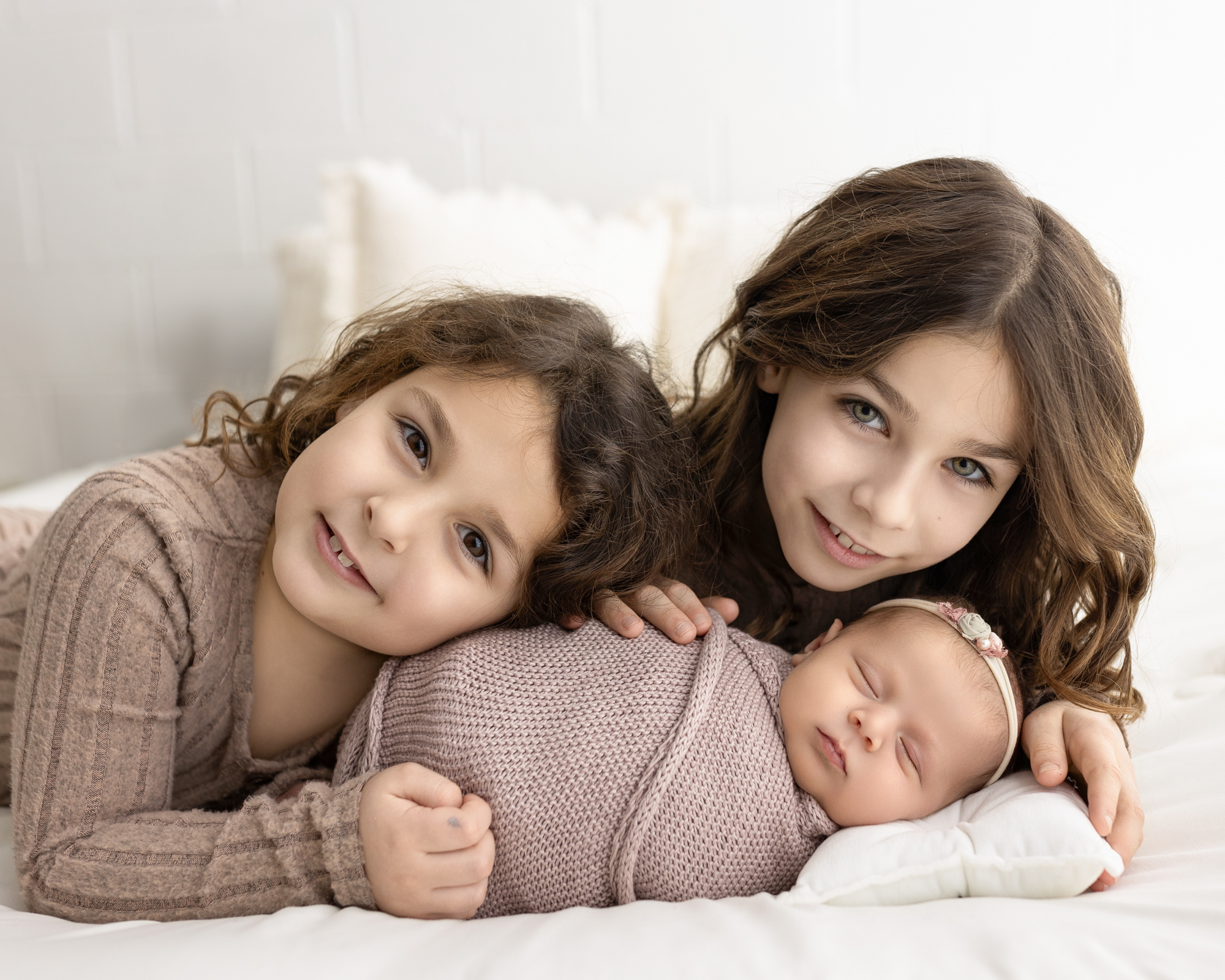
And then comes one of my favorite parts: photographing your growing family.
When I photograph a newborn with an older sibling, my expectations for that sibling depend entirely on their age.
A two-year-old is not going to behave like a seven-year-old — and I don’t expect them to.
Sometimes we get the sibling photograph immediately.
Sometimes we need a snack.
Sometimes we need a break.
Sometimes Mom is hiding just outside the frame.
Sometimes I’m making ridiculous noises.
And sometimes Photoshop gets involved. 😂
That’s part of photographing children.
One of the best things you can do before your newborn photography session is keep the pressure low. Instead of repeatedly telling your child that they have to smile and take pictures with the baby, talk about it casually.
Tell them they’re going to come see me and show me their new baby.
That’s it.
We’ll take it from there.
Let Your Older Child Have a Moment of Their Own
During newborn sessions, I also love capturing something that isn’t entirely about the baby.
Maybe it’s a portrait of your older child alone.
Maybe it’s them cuddling Mom or Dad.
Maybe it’s simply letting their personality come through for a few minutes.
Because although your newborn is the newest chapter of your family’s story, your older child’s story didn’t stop when the baby arrived.
They’re part of this season, too.
And years from now, those first photographs of your children together may become some of the most meaningful images you own.
FAQs: How to Prepare Older Siblings for a New Baby
When should I tell my child they’re getting a new sibling?
There isn’t one perfect time for every family. Consider your child’s age and ability to understand time. Younger children may have difficulty understanding what “six months from now” means, so connecting baby’s arrival to a season, holiday or other familiar event may be easier.
Is it normal for an older sibling to be jealous of a new baby?
Yes. A new baby changes the amount of attention an older child receives and can bring mixed emotions. Your child can be excited about their sibling and still struggle with jealousy or frustration.
Is regression normal after bringing home a new baby?
Some younger children may temporarily return to behaviors they had previously outgrown, such as baby talk, wanting additional help or having toileting accidents. Continue providing reassurance and maintaining familiar routines while they adjust.
Should I make my older child help with the new baby?
Invite them, but don’t force them. Some children immediately love being involved in baby’s care, while others need more time. Give them simple, age-appropriate opportunities to participate and allow their interest to develop naturally.
How can I prepare my toddler for newborn family photos?
Keep it positive and low-pressure. Avoid spending days telling your toddler that they need to smile, behave or hold the baby for pictures. Bring along favorite snacks or comfort items, and choose a newborn photographer who is comfortable working with young children and understands that toddlers need patience and flexibility.
There isn’t one perfect answer for how to prepare older siblings for a new baby. Every child’s personality, age and relationship with their parents is different. Starting the conversation during pregnancy, keeping familiar routines when possible and giving your older child plenty of reassurance can all help make this big family transition feel a little easier.
Your Family Is Growing — Give Everyone Time to Grow With It
There isn’t a perfect way for a child to become a big brother or sister.
Some kids are obsessed with the baby from day one.
Some barely acknowledge them.
Some want to help with absolutely everything.
And some would really prefer Mom put that baby down immediately. 😂
They’re adjusting to a brand-new family dynamic just like you are.
Give them time, reassurance and opportunities to be involved without forcing the relationship.
Eventually, that tiny baby will become the sibling sneaking into their room, stealing their toys, making them laugh, driving them crazy and creating a lifetime of memories alongside them.
And those first days together?
They’re worth remembering.
If you’re expecting a baby in Canton, Akron or anywhere throughout Northeast Ohio and are beginning to think about newborn photography, I’d love to help document this next chapter for your entire family — including the very important newly promoted big brothers and big sisters.